Faster, safer evacuation for everybody
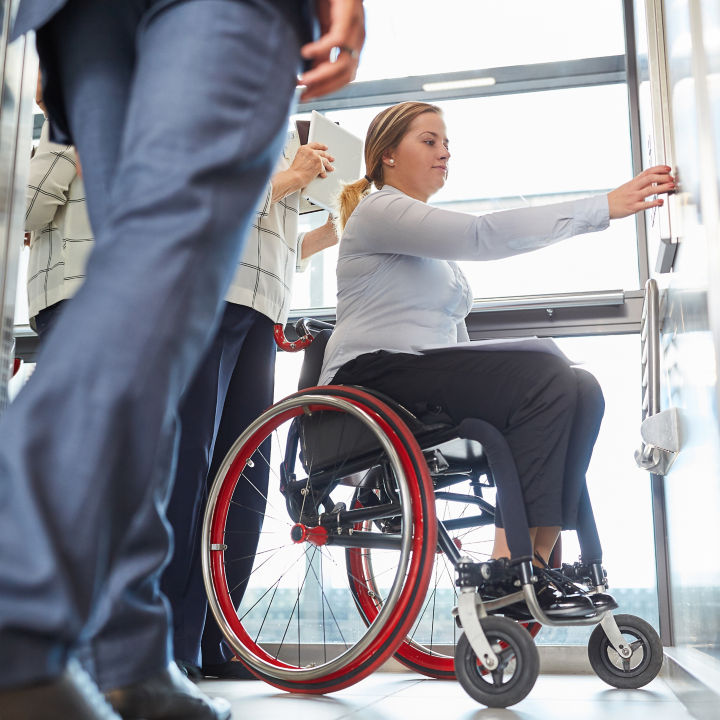
People who cannot use stairs, or who need more time during evacuation, can use elevators to exit the building safely and comfortably — supporting a more efficient evacuation process for everyone.


KONE Evacuation Solution enables safe, controlled elevator evacuation. It integrates with fire and life-safety systems, keeping elevators operational during emergencies instead of shutting down. Automatic evacuation using normal elevators can significantly improve people’s ability to exit in the first minutes of an incident before emergency services arrive or conditions worsen within the building.
Serious past incidents have shown that stairs-only evacuation can be slow and impractical in high-rise buildings. Elevators are often the fastest way to evacuate everybody. The taller the building, the more efficient elevator evacuation is.
KONE Evacuation Solution can be configured to meet widely recognized elevator evacuation standards and support a comprehensive range of building evacuation strategies.
For developers, architects, and building owners, elevator evacuation should be considered early in the project as the evacuation strategy sets key design requirements.
People who cannot use stairs, or who need more time during evacuation, can use elevators to exit the building safely and comfortably — supporting a more efficient evacuation process for everyone.
Integrate your elevators with building fire alarm systems to seamlessly execute evacuation operations as defined in the building’s evacuation plan.
Elevator-based evacuation can reduce stair capacity requirements, creating more usable floor area and improving overall space efficiency.
HOW KONE EVACUATION SOLUTION WORKS
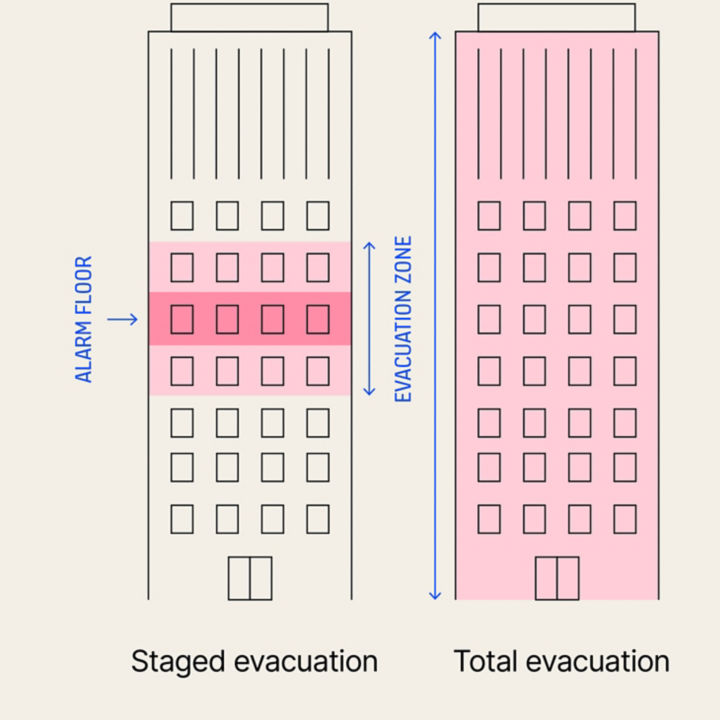
At the heart of KONE Evacuation Solution is KONE OEO. It integrates your building’s fire system with the elevator system to evacuate the affected floor and surrounding levels in a controlled, planned way.
When the fire system detects an alarm, the elevator system enters OEO mode and begins evacuating the affected floor and surrounding levels — rather than recalling elevators to the lobby and shutting them down. Elevator dispatch is prioritized based on evacuation zones defined by the fire system.
Each lobby features a variable messaging system to inform occupants about elevator availability. Inside the elevator, visual and audible guidance helps passengers proceed safely throughout the evacuation.
HOW KONE EVACUATION SOLUTION WORKS
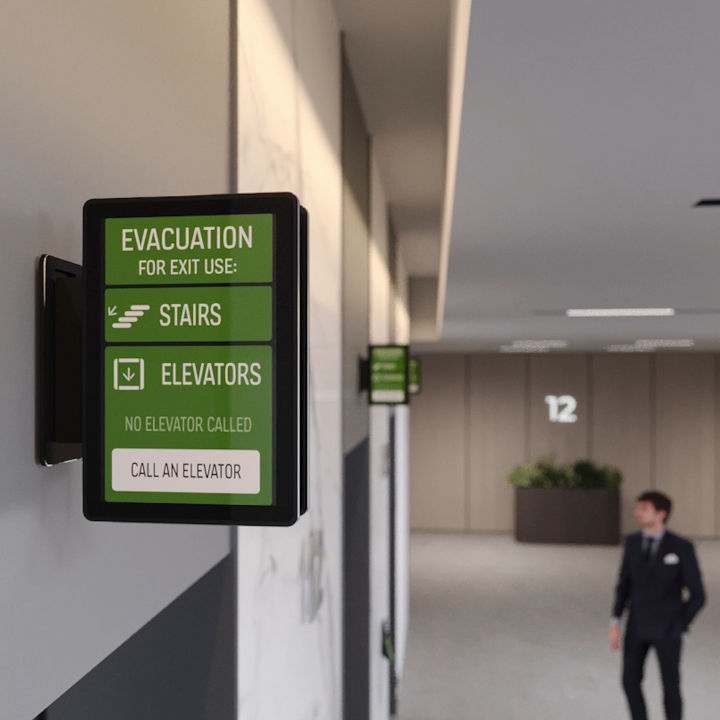
For elevator evacuation to work effectively, people need clear guidance throughout the event.
KONE Evacuation Solution provides coordinated, real-time instructions, including which elevators are available, estimated arrival times, and when elevators are temporarily serving other evacuation zones.
If the emergency situation changes, evacuation zones are automatically updated through integration with the building systems, helping ensure guidance remains accurate throughout the evacuation.
HOW KONE EVACUATION SOLUTION WORKS
KONE Evacuation Solution can be tailored based on required elevator evacuation capacity, building type, and applicable standards. Three main configurations are available:
Note: Remote‑controlled evacuation under EN 81‑76 is not currently included in KONE's standard offering.

The key prerequisites for elevator-based evacuation are:
KONE People Flow™ Planning experts can support your project team in determining the appropriate elevator capacity based on building population data.
Ready to explore elevator‑based evacuation for your next project?

Combining intelligence, sustainability, and dependable performance, KONE elevators keep people moving smoothly while making better use of building space and improving energy efficiency.

From targeted upgrades to full elevator replacement, our modernization solutions minimize disruption for building users while extending equipment lifetime and enhancing reliability, energy efficiency, and ride comfort.

KONE Remote Service helps keep elevators running safely and reliably through intelligent remote monitoring, diagnostics, and software updates performed outside peak hours.
KONE Evacuation Solution is a set of elevator functions, components and planning services that enable elevators to be used as part of a building's evacuation strategy, in line with applicable codes and standards. It includes KONE Occupant Evacuation Operation (OEO) and configurations designed to support ASME A17.1 OEO and EN 81‑76 evacuation of persons with disabilities.
Not automatically. Using elevators for evacuation depends on local codes and on the building being designed (or modernized) to support elevator evacuation. Requirements typically include protected elevator lobbies, appropriate fire and life‑safety systems, secondary power and an approved Fire and Safety Plan that explicitly includes elevators as part of the strategy.
No. Stairways remain a fundamental part of building evacuation and are required by code. Elevators complement stairs, particularly in high‑rise buildings and for people who cannot safely use stairs. KONE Evacuation Solution is designed to coordinate the use of both, not to replace one with the other.
It is most effective when designed into a new building from the outset. In existing buildings, the introduction of elevator evacuation depends on whether the building can be refurbished to accommodate it, ultimately depending on approval from local authorities of a revised evacuation plan that recognizes the use of elevator in building evacuation.
The number depends on building height, population, occupancy type and how many people are expected to use elevators versus stairs in an emergency. KONE People Flow Planning experts use traffic analysis and code guidance to help estimate the required capacity and configuration for your specific project.
Requirements for secondary power are set by local codes and must be addressed in the building design. KONE Evacuation Solution is designed to work within those requirements, but the availability and behavior of elevators in a power failure scenario depend on the overall building power and fire‑safety design.
Yes. KONE Evacuation Solution can be integrated with KONE Destination control and conventional control systems, so that the same elevator group delivers efficient everyday people flow and supports evacuation operations when needed. Integration details are defined during project planning.
Yes. Supporting the safe evacuation of people with mobility issues is a key priority of KONE Evacuation Solution. It provides peace of mind by ensuring they can be evacuated safely, while supporting smooth movement on stairs for other building users.